Archons in the Machine: Gnostic Cosmology as a Diagnostic of Degenerative Political Power Structures
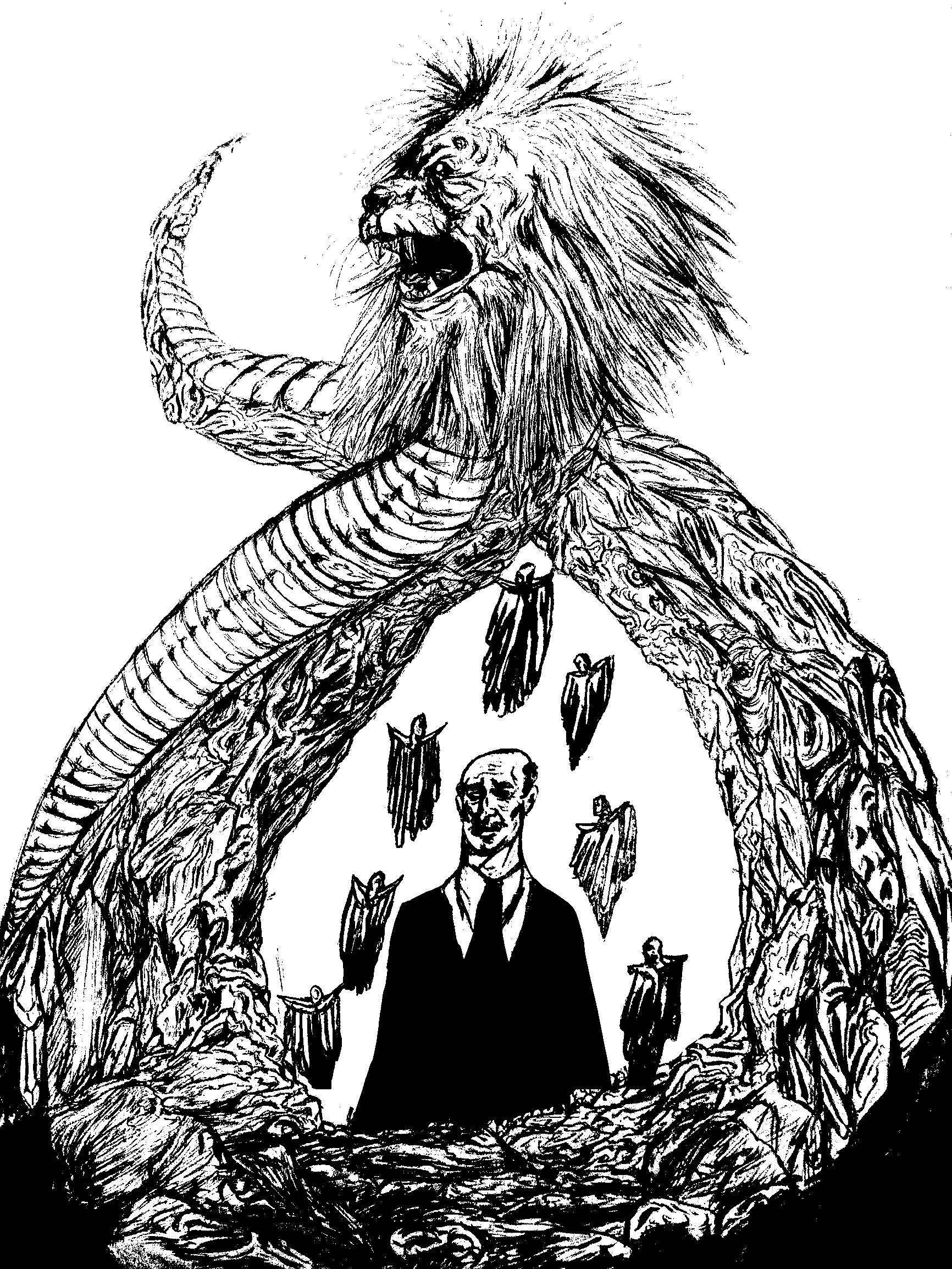
Humans have always exhibited a peculiar interest in the creation and maintenance of power structures. Indeed, these hierarchies are requisite for the maintenance of fully functioning societies. Historically, systems like governments, laws, and other overarching institutions have layered on so many networks of authority that it has become unobtainable, appearing opaque to an “average” observer. The average observer in this case are those people excluded from internal operations and covert negotiations that presumably occur within elite groups. Following recent political and cultural events in the news, it is no wonder why Americans are becoming more interested in understanding the machinations of global elite systems. These skirmishes in the human consciousness are prompting curious individuals to seek a deeper explanation for why the world is ordered as it is, and why humanity remains seemingly constrained within it. Beyond simple political explanations however, alternative theories as to how and why this occurs has veered off into cosmological speculation as a legitimate source of knowledge.
Gnosticism has been in vogue in recent years. This philosophical tradition is miraculously just as relevant today as it was during its emergence. In fact, it is especially important in the present world where the dissemination of misinformation is frequently found within the fold of globalized communication systems. Political partisanship is ever increasing, forwarding the era of great ideological polarization and the capitulation to both schizophrenic and volatile online discourse. Adopting the quiet and studious nature of our forefathers and mothers is necessary for a sound mind. It is that inner wisdom, enduring patience, and moral consistency that maintains one’s dignity in an age of phrenetic political perspectives. For a lot of people, this dignity is not only lost, but never cultivated. It is simply alien to them. Therefore, ours is the generation of lost souls. Political power systems have stolen the minds of the youth and handed over a destabilized economy, international wars, fluctuating cultures, a collapsing job market, and a failing housing market. Sadly, we do not even have the inner stability to process and respond to these systemic failures. Returning to old philosophical traditions is unsurprisingly attractive to a spiraling youth. Perhaps, the ancients had access to some hidden truth that could provide even a modicum of hope? Perhaps, by applying Gnostic evaluation, people are more equipped to distinguish the difference between true understanding, and manipulative rhetoric trapping the human Will. The exploitation of the youthful mind has never been so easy, but honest self-discovery will never fail.
Gnosticism and the Archons Examined
The first step toward cultivating Will in an age of polarization is engaging with these old cosmological systems. Gnostic philosophy is one of them. Paradoxically, this is also where many may lose interest, since even the mere application of this classification proves to be contentious. Gnosticism is not typically understood as a single, unified movement. This makes for a rather difficult endeavor in articulating its historical influence. Still, dominant recurring themes have consistently shaped its development and expression over time.
Essentially, Gnosticism is an ancient religious and philosophical system centered on the concept that personal salvation is derived from inner knowledge, also known as gnosis. This “inner knowing” has been understood as wholly removed from the teachings of proto-orthodox Christianity exhibited during the early centuries of the Common Era where the first signs of its activity happened in the Medetarrianin, namely through the distribution of its first writings1. Although Gnosticism emerged within the same cultural context as early Christianity, it offers a fundamentally different understanding of reality and the nature of the human condition. Gnostic thought is shaped by a strong dualist perspective, nearly mirroring the Manichaeian tradition of dualistic cosmology, with a greater emphasis placed on the perceived opposition shared between the material world and the metaphysical realm. In the Gnostic teaching, it is commonly understood that the material world as we know it was created by the Demiurge. Although Gnostic systems vary on the exact identity and intention of the Demiurge, with some suggesting that it is equivalent to the Biblical Yahweh, while others assert it is merely an incompetent being incapable of omniscience like that of the Supreme Being from where it has emerged. The general consensus remains that the Demiurge is the one who fashioned and maintains material reality. In addition to all of this, it is important to understand the so-called limitations of the Demiurge, as it is clearly differentiated from the Supreme Being, the one who embodies the objective and highest good.
Here is where the mention of the Archons becomes prominent. Understanding these rulers is the first step to knowing both the function of the material world as well as the world within ourselves. The Apocryphon of John, (also called the “Secret Book of John”) demonstrates the foundational precepts establishing this philosophical tradition. The text introduces the Demiurge as a flawed and ignorant being. It lists its three given names: Yaldabaoth, Sakla (meaning “fool”) and Samael (meaning “blind deity”), each name specifying the arrogant, false, and ignorant nature of this being. Yaldabaoth, or the Demiurge, is described as the creator of humanity. The Archons are said to be the keepers of the material world, and are considered subordinate to the monstrous Demiurge, who is described in expanded versions of the Secret Book of John as having a lion’s head with a serpentine body. Although descriptions of the Demiurge’s representational appearance vary, the lion-headed serpent is the classical understanding. This is probably a byproduct of cultural diffusion. The Ancient Egyptian deity Set, although not ascribed a standard description, is a mysterious figure who is characterized as having several animalistic features, including equine features. There are some artifacts portraying the deity of desert and chaos as donkey-headed2. During specific historic periods in Egyptian history, namely the Second Intermediate Period (c. 1650–1550 BCE) during the reign of the Semitic-speaking Hyksos peoples, the worship of Set as a chief deity was common in parts of Egypt. Some scholars suggest that it is during this period that the conflation between Set and the Hebrew deity Yahweh occurred, paving the way for the accusation of onolatry often set against the Jews. Following the Hellenisation of Egypt, Set would become associated with Typhon, the serpentine giant who sought to overthrow the chief Greek god, Zeus. Typhon’s narrative closely mirrors Set’s attempt to usurp Osiris and claim kingship.
While most Gnostic texts refer to there being seven Archons as the designated rulers of our material reality, no total consensus on the number has been reached. Some traditions assert there are actually five, others say twelve, and some even claim there being 365; one for each day of the year. In some Christian Gnostic philosophical traditions, Abraxas is the chief Archon and archetype of all archetypes3. As subordinates of the Demiurge, Archons are tasked with being the primary barriers to human spiritual knowledge and gnosis by ensnaring these divine emanations of the Supreme Being though by either natural means, sinful behaviors, or even ignorance. Essentially, their purpose is limiting humans from gnosis and the maintenance of the physical world.
Up to this point, we have examined fairly literal descriptions of Gnostic celestial figures. However, understanding the benefits of this framework is not dependent on the literal interpretation of these ancient texts and beliefs. It is up to you whether or not you find it beneficial to adopt the literal Gnostic worldview. For the purposes of this essay, the Gnostic concept of Archons serves as merely a framework for understanding the creation of institutions and adoption of political structures in human society and its impacts. While traditionally interpreted from a theological mindset, this paradigm can be applied as a symbolic account of how external structures mediate, constrain, and shape human Will and volition. In this interpretive perspective, the Archons are not literal entities, but heuristic devices that represent systemic forces operating between individuals and their capacity for autonomous knowledge. Just as Archons presumably govern the material world to maintain the authority of the Demiurge and limit access to spiritual knowledge, institutions and political systems similarly function to organize, regulate, and control populations, often reinforcing existing hierarchies manufactured to operate as barriers to personal betterment or obtaining hidden knowledge. In this way, regardless of its perceived reality, the Archonic model provides a model from which the observer can recognize and defeat these barriers to deepen their understanding of reality and, hopefully, achieve gnosis and liberty.
Breaking Through Institutional Snares and Archonic Power
Within contemporary political philosophy, the notion that human disposition is manufactured rather than purely self-originating is well established. These days, political institutions do not typically exert control through overt coercion; rather, they function by carefully organizing the field of possible action. Legal norms, bureaucratic procedures, and media infrastructures delimit what is thinkable, sayable, and actionable within a given society. Following from these limitations lends to a stymied—although not completely eliminated—personal Will. When interpreted through a Gnostic lens, these mechanisms parallel the Archonic function of maintaining a stable, but constraining order, one that presents itself as natural or inevitable while subtly guiding behavior, belief, and predilection of Will.
This interpretive alignment becomes even more pronounced when viewed through the lens of critical social theory, whose influence within mainstream academia is vast, to say the least. Specifically, this framework interrogates systemic power relations, examining how underlying dynamics, institutional forces, and social structures shape these relationships. For instance, imagine there being a persistent advertising trend that prominently features a particular social quirk— anything from a specific relationship dynamic to a pattern of unconventional behavior—that is hardly ever occurring in social reality. Despite the limited statistical evidence supporting its prevalence, institutional media agents continuously shape consensus through the not-so-subtle art of repetition. Through this strategy of “manufacturing consent,” suddenly groups of people are convinced that, not only are these dynamics occurring, but that failing to recognize these dynamics—or to embrace them personally—constitutes a form of harm. It is worth exploring the question that, if this strategy of manufactured consent can happen, why are we to assume that prominent figures in positions of power would not use their influence in this way? It is no surprise to anyone today however, that mass media institutions happily structure public understanding in ways that stabilize existing power relations. In this way, Archons can be understood as symbolic representations of this type of influence that regulates attention and defines legitimacy.
Through an interpretive application of Gnosticism, Archons can be extended beyond comprehensive systems like the media to symbolize concrete political actors. In this context, the Archons represent both individuals and groups—including policymakers, bureaucratic regulators, and party elites—whose decisions shape the normative environments in which people act. Once again, their power doesn’t rely on direct domination, but is found within their capacity to define and legitimize global agendas, discourse, and incentive structures by guiding collective behavior. Political agency in modernity is often exercised through agenda-setting and institutional design rather than overt coercion. For example, elected officials and bureaucratic leaders determine which issues receive legislative attention, what data is prioritized, and which
policy options are framed as viable even when alternatives exist. These decisions influence not only concrete outcomes, but also shape the perspective of citizens when considering the credibility of public issues and their decisions in future elections. Suddenly, we find ourselves in a field of action where engineered ignorance constructs the social reality we abide in without informed consent. In other words, it is self-fullfilling.
The idea of fully “removing oneself” from the Archonic model of engineered ignorance and stymied Will is, in practical terms, not really viable. Modern human life is largely institutionalized, including the legal, economic, linguistic, and cultural systems. Such a reality cannot simply be “forgotten” or “left behind” without severe tradeoffs. In fact, falling for the illusion of there even being an “exit” is in itself misleading. This is the suffocating reality of modern life. While a homesteading or pioneering stance against globalization may seem romantic, the administrative structures of civilized human society have largely rendered it an unfeasible option. Although it is more feasible to remove oneself from civilized society than from material existence, doing so entails relinquishing a degree of interconnectedness that many consider essential for a fulfilling life; one made complete with activity, friends, family, and self-fullfillment. In this sense, such a withdrawal resembles a form of suicide. Although not as extreme as literal self-destruction, but comparably isolating. For that reason, a more realistic approach is not complete withdrawal, but a modulation of one’s relationship to these structures. The central task is not physical escape, but a healthy cultivation of gnosis and an awareness of how one’s individual desire is created. Similarly, the Hermetic tradition emphasizes the significance of this inner transformation. Although holding to differing cosmological traditions, both Hermeticism and Gnosticism share the belief of the divine nature of the soul. More importantly, both traditions recognize the importance of cultivating a healthy acknowledgement of this revelation.
Practically, this step can take several forms. First, individuals can diversify their informational environment and input to reduce dependency on any single narrative source. Second, one must recreate habits of critical and personal reflection. Questioning why certain options appear natural or desirable, and consistently engaging in the process of introspection, can interrupt processes of longform social conditioning. Third, engaging selectively, rather than reactively and completely, to political and media systems allows the preservation of directed agency. One can choose when and how to participate, rather than becoming wayward and hopelessly absorbed. Lastly, creating new experiences and thinking patterns through direct personal action and firsthand experience will not only develop unique insight, but lead to perfecting the practice of enjoying personal revelation and generating gnosis.
Concluding Statements
We began this analysis by identifying the corrosive elements of political polarization and the dissemination of misinformation through globalized communication systems that are conspiring to repress human Will and gnosis. Through the application of a Gnostic framework of
understanding, we have taken one step closer to alleviating the degenerating effects of these norms. Will flows from gnosis, and gnosis buds from patience and a stable mind. Those systems that cause strife, ignorance, and vice are akin to the motivations of the Demiurge and its Archons; suppressing human agency, peace, and knowledge through the applications of falsehoods and self-perpetuating systems of control. Breaking through these illusions first begins with protecting oneself from the oppressive nature of false social structures that alienate gnosis.
Footnotes
1 Williams, Michael. 1998. “Gnosticism | Definition, Texts, Movements, & Influence.” Encyclopedia Britannica. https://www.britannica.com/topic/gnosticism/Influence.
2 “In the Desert of Set - the Egyptian God Set.” 2019. https://www.desertofset.com/intro/set.html.
3 Smith, William. 1877.“A Dictionary of Christian Biography, Literature, Sects and Doctrines : Being a Continuation of ‘the Dictionary of the Bible.” Internet Archive. 2026. https://archive.org/details/dictionaryofchwace01smituoft/page/9/mode/1up.
